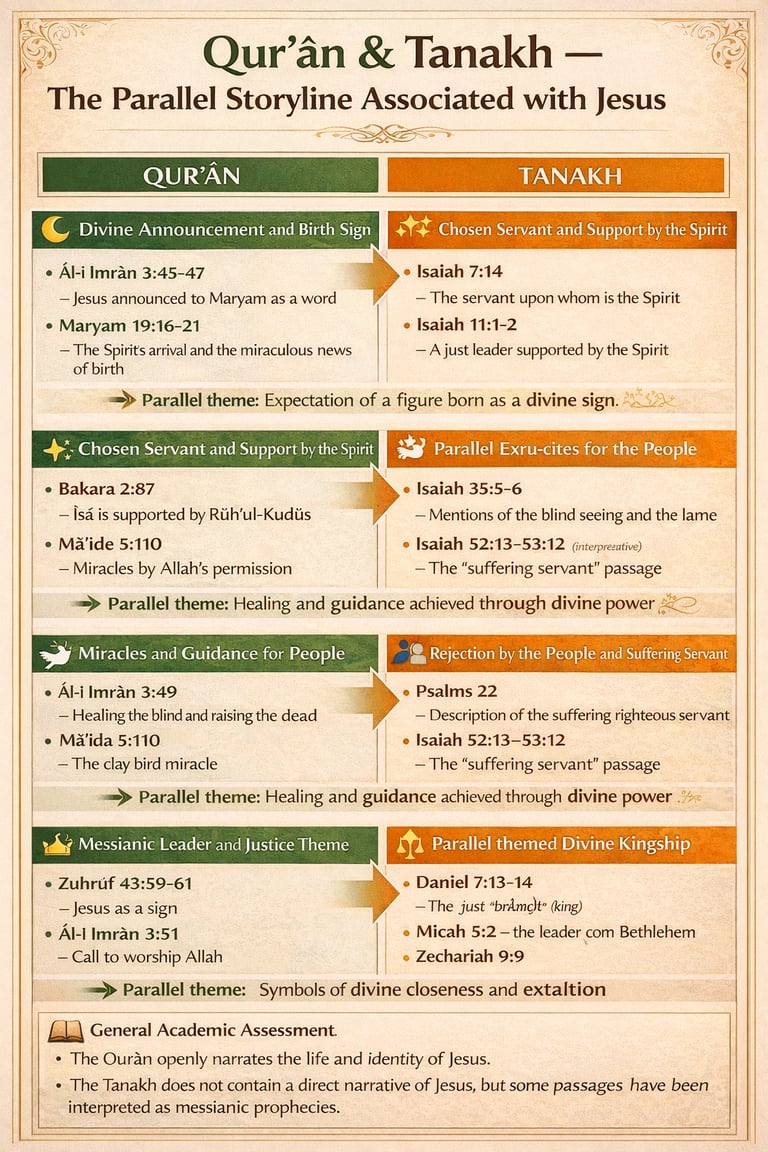
JESUS IN THE TORAH AND THE GOSPEL
JESUS IN THE TORAH AND THE GOSPEL. The Gospel says: “Jesus the Messiah — Yesus Christos!” (2368) Know that it is “the youthful word, heir of MUHAMMED!” (2368) “It means the word reflecting MUHAMMED through Ali!” (2368) Closer to you than yourself — strive to find it!
APOCALYPSE BOOK
JESUS IN THE TORAH AND THE GOSPEL
“The sacred stone means the temple — you are the Church of Peter!” (344)
“The black point of the heart,” the “Black Stone,” is the voice of Ali! (344)
The Gospel says: “Jesus the Messiah — Yesus Christos!” (2368)
Know that it is “the youthful word, heir of MUHAMMED!” (2368)
“It means the word reflecting MUHAMMED through Ali!” (2368)
Closer to you than yourself — strive to find it!
Greek “He Gnosis” and “Stauros” correspond — why? (1271)
“Wisdom, symbol of Adam,” and also the Cross — therefore! (1271)
Remove the zero from Christos — it equals “al-Masîh”! (1480)
Eight hundred eighty-eight is “Yesus,” saying “Basmala”!
“The Lord of the worlds” and “Light” correspond in Hebrew! (207)
“Light” and MUHAMMED are alike — many subtle secrets lie within!
“Our Lord Jesus, son of Mary,” in Hebrew: (723)
Look — it equals “Bektash”; many mysteries are hidden there! (723)
In the Torah: “The Spirit of the Lord!” — the letter “Shin,” three hundred indeed! (326)
“When it descends,” the “Savior Jesus” becomes the “First Adam!” (326)
“Shin” is fire — yet it did not burn Abraham!
Moses saw it at Sinai; in the staff it became the serpent!
Opened “Shin” means tooth — “the dog of the cave!” (360)
Four types that give the command “Be!” — remember the eight teeth! (360)
In Hebrew “Messiah” and “Serpent” are equal — why? (358)
Because both are hidden within the human being!
The Hebrew Basmala is the Word of Testimony! (806)
A sign for the “day of descent of the youthful names”! (806)
“When Gabriel appears,” he says “Shalom,” “Merhaba”! (376)
For all of these become the complete epithet of Ali! (376)
“Rope” and “the hand of Jehovah” correspond in Hebrew! (40)
We held onto it when He said, “Am I not your Lord?” (40)
In Hebrew, the letter “B” equals “Lord Jesus”! (412)
Remove one — Elijah emerges; Ali appears in many forms! (411)
Master M.H. Ulug Kizilkecili
Türkiye/İzmir - 5 August 2000
IMPORTANT NOTE :The original text is poetic, and the author cannot be held responsible for any errors in the English translation! To read the original Turkish text, click HERE! The following section is not the author's work, and the author cannot be held responsible for any errors made!
FOOTNOTES
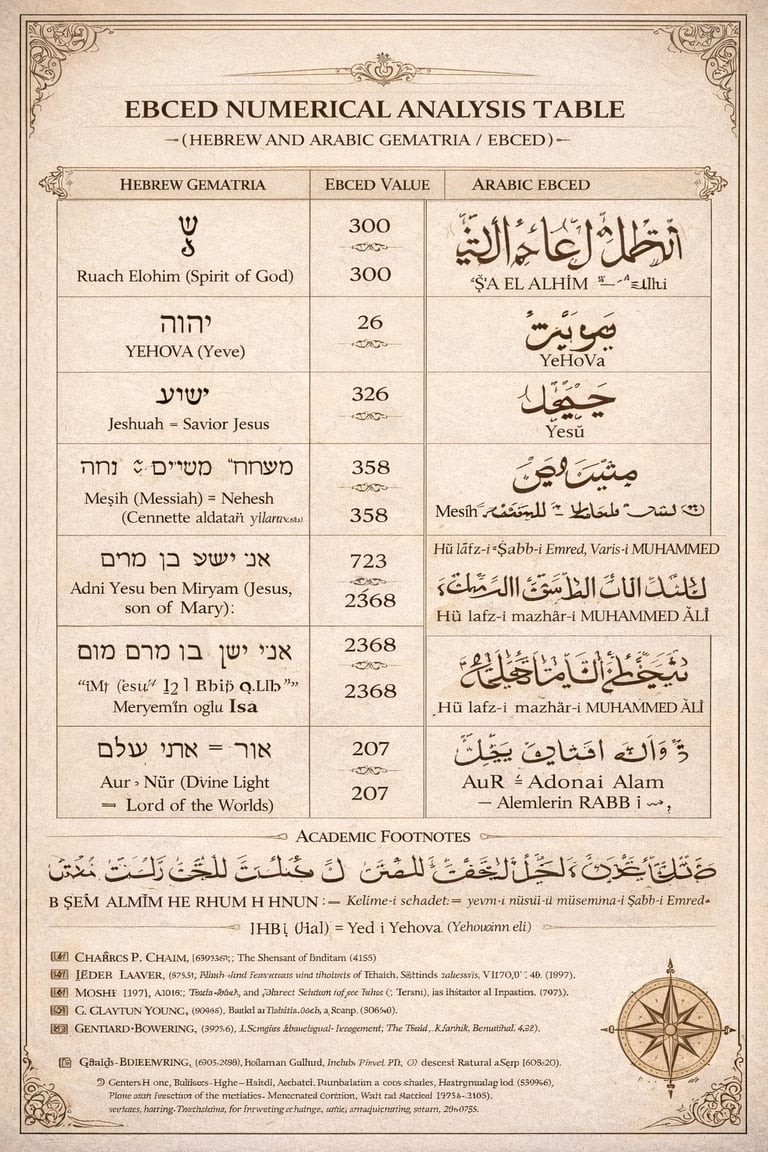
1. Gematria, Abjad, and Isopsephy Traditions
The numerical correspondences in the text reflect ancient systems where letters possess numerical values: Jewish gematria, Islamic abjad, and Greek isopsephy.
2. “26 = Yehova (YHWH)”
The number 26 corresponds to the Hebrew Tetragrammaton (Yod=10, He=5, Vav=6, He=5), a widely recognized gematria example.
3. Messiah = Serpent (358)
The equivalence of Mashiach and Nachash appears in Jewish mystical interpretations symbolizing fall and redemption, though it remains interpretive rather than doctrinal.
4. Gnosis and Stauros
Greek terms evoke early Christian mystical currents where knowledge (gnosis) and the cross (stauros) symbolize spiritual transformation.
5. Light Theology (AUR / Nûr)
The parallel between Hebrew Or (light) and Islamic Nûr reflects a shared Abrahamic metaphor of divine illumination.
6. Shin Symbolism
Associating the Hebrew letter Shin with fire and spirit belongs to symbolic mysticism; academic usage treats this as interpretive symbolism rather than historical linguistics.
7. Baptismal and Covenant Language
References to descent, spirit, and covenant echo Jewish prophetic themes and Christian sacramental theology, reinterpreted through Sufi metaphysics.
8. Stone and Temple Imagery
The “sacred stone” motif resonates with Petrine imagery in Christianity, Temple symbolism in Judaism, and Kaaba-centered symbolism in Islam.
Extended Academic Footnotes
Esoteric Hermeneutical Framework:
The text operates within a mystical–symbolic interpretive tradition that reads biblical, Qurʾānic, and Islamic historical figures through allegory rather than literal theology. Such an approach resembles esoteric currents found in certain Sufi, Hurūfī, and Anatolian heterodox traditions, where sacred language is treated as a coded system of spiritual correspondences.Use of Gematria and Letter Mysticism:
Numerical equivalences (e.g., “888 = Yesus,” references to Hebrew letters such as Shin, or calculations involving Christos and al-Masīḥ) reflect the method of gematria/abjad numerology, a practice present in Jewish Kabbalah, Islamic letter mysticism (ʿilm al-ḥurūf), and later syncretic traditions. From an academic perspective, these calculations are symbolic constructs rather than linguistically verifiable etymologies.Interreligious Syncretism:
The poem merges motifs from the Torah, the Gospel, Islamic scripture, and Shiʿi devotional symbolism. The linking of Jesus, Muhammad, and ʿAlī within a single metaphysical lineage illustrates a theological synthesis characteristic of certain esoteric Shiʿi and Bektashi-influenced writings, rather than mainstream Sunni, Rabbinic, or Nicene Christian doctrinal frameworks.Gnostic and Neoplatonic Vocabulary:
Terms such as “Gnosis,” “Light,” and “Word” evoke late antique Gnostic and Neoplatonic cosmologies, where divine knowledge (gnōsis) and emanational metaphors structure the understanding of prophecy and salvation. Scholars often interpret such language as reflecting a symbolic cosmology rather than historical doctrinal continuity.Symbolism of the Hebrew Letter Shin:
References to the letter Shin as fire, spirit, or divine descent parallel interpretations found in Jewish mystical literature and later Islamic esoteric adaptations. The association of letters with cosmic forces demonstrates a metaphysical reading of scriptural language that prioritizes symbolism over philological accuracy.Messiah–Serpent Parallels:
The claimed equivalence between “Messiah” and “serpent” echoes motifs found in certain mystical traditions where opposing symbols are unified within the human microcosm. Academic scholarship generally treats such parallels as allegorical constructions rather than reflections of normative Jewish or Christian exegesis.Ali-Centered Esoteric Theology:
Several lines present ʿAlī as a cosmic or metaphysical principle (voice, light, rope, epithet). This aligns with strands of ghulāt-influenced or Bektashi-Alevi poetic literature, where sacred figures are interpreted as manifestations of divine attributes within a symbolic cosmology.Linguistic and Philological Considerations:
Many linguistic claims (e.g., removing letters or zeros to produce equivalences across Greek, Arabic, and Hebrew) should be viewed critically. Academic linguistics emphasizes historical phonology and textual transmission, whereas the poem employs a devotional semiotics that prioritizes symbolic resonance.Comparative Religious Perspective:
From a comparative-religion standpoint, the text exemplifies how mystical poetry creates a shared sacred vocabulary across traditions. Rather than representing canonical theology, it illustrates the creative reinterpretation of scripture within localized devotional communities.Scholarly Classification:
Overall, the passage may be classified as esoteric devotional poetry with numerological exegesis, reflecting a metaphysical worldview that integrates Islamic, biblical, and Gnostic imagery into a unified symbolic narrative. Researchers should therefore analyze it within the fields of Islamic mysticism, interreligious symbolism, and late esoteric literature rather than doctrinal theology.